


Sustainable Tourism Through Green Technology Innovations
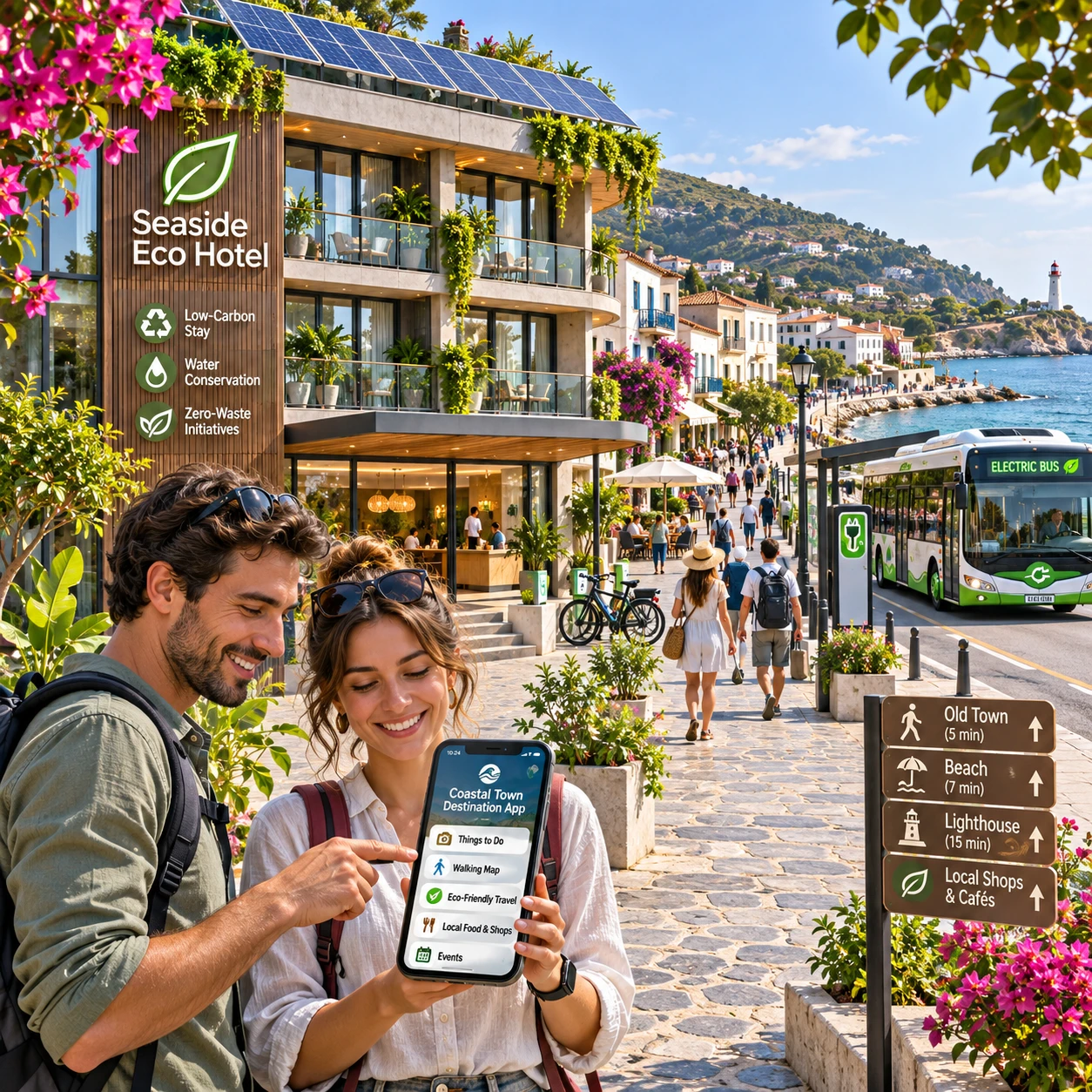
Travel depends on places, energy, water, and transport—all of which tourism can put under pressure. Green technology can help hotels, transport providers, destinations, and travelers use these resources more carefully. Its value, however, depends on how it is planned and measured; a digital tool or new piece of equipment is not automatically sustainable.
What green technology means for sustainable tourism
Green technology in sustainable tourism means using equipment, software, and infrastructure to reduce travel’s environmental impact and manage resources more efficiently. It can support cleaner energy, lower-emission transport, less waste, and better decisions about visitor numbers.
The tools range from solar panels and efficient heating systems to electric buses, water sensors, and digital booking platforms. Some reduce impacts directly: a heat pump can replace a fossil-fuel boiler, for example. Others help people make decisions, such as a destination dashboard that shows when popular sites are approaching capacity.
Technology works best as part of a wider operating plan. A hotel can install efficient equipment but still waste energy through poor maintenance. A destination can collect visitor data yet fail to use it to protect sensitive areas. The useful question is not simply whether a tool is “green,” but whether it changes resource use or travel behavior in a measurable way.
Cleaner energy for hotels and destinations
Hotels and tourism facilities can cut operational emissions with renewable energy, energy-efficient buildings, and controls that adjust heating, cooling, and lighting to actual demand. The strongest results come from matching the technology to the building and its local energy supply.
Renewable energy may include rooftop solar, solar hot water, or electricity purchased through a verified renewable tariff. Where a site can generate power on location, batteries can store some of it for later use. These systems can reduce reliance on fossil-fuel electricity, though their performance depends on local weather, grid conditions, installation quality, and equipment lifespan.
Buildings also matter. Insulation, efficient windows, heat pumps, and high-performance appliances can reduce the amount of energy a hotel needs in the first place. Smart building controls can then fine-tune lighting and temperature using occupancy sensors, room bookings, and outdoor conditions. For example, a system can avoid heating an unoccupied room while keeping shared spaces comfortable.
Before investing, operators should check energy bills, building condition, and maintenance capacity. Controls that guests cannot understand may be overridden, while poorly configured systems can make rooms uncomfortable. A practical sequence is to measure current use, address avoidable losses, and then size renewable systems around the remaining demand.
Lower-impact transportation innovations
Electric transportation, better route planning, and improvements in aviation can help reduce the impact of getting around, especially when travelers can shift from private cars to shared or public transport. Each option has limits, so providers should consider the whole journey rather than a single vehicle.
Electric buses, shuttles, taxis, and rental cars can reduce tailpipe pollution and, depending on how electricity is generated, greenhouse-gas emissions. Charging infrastructure, vehicle range, purchase costs, and access to maintenance affect whether electrification is practical. E-bikes and electric ferries can also serve specific routes, though weather, terrain, battery capacity, and local infrastructure matter.
Travel apps can make lower-impact ground transport easier to use. A route planner that combines train, bus, walking, cycling, and charging locations can help visitors compare options before booking. Clear information about transfers, accessibility, and real-time disruptions is as important as showing a low-carbon route; a theoretically cleaner trip is not useful if it is difficult to complete.
Sustainable aviation remains more challenging. Airlines and aircraft makers are working on measures such as more efficient aircraft, operational improvements, and sustainable aviation fuels. These options have constraints, including limited fuel availability, costs, and the need to assess emissions across production and use. Travelers can compare available rail or coach alternatives for suitable routes, but technology alone cannot remove aviation’s environmental impact.
Smart tools for managing destinations
Smart destination management uses data and digital platforms to help destinations manage visitor flows, services, and resources. When collected responsibly and used for clear decisions, this information can reduce pressure on crowded attractions and improve the visitor experience.
Reservation systems, anonymized mobility data, and live occupancy counts can help managers spot peak periods. They might then encourage visits at quieter times, adjust shuttle frequency, or temporarily limit access to a fragile site. Digital maps can direct visitors toward alternative routes and nearby businesses, spreading tourism activity more evenly.
Destinations can also use connected sensors to monitor air quality, traffic, public bins, and water use. This gives local teams a better view of where services are needed. A waste collection team, for instance, can prioritize full bins rather than follow a fixed schedule, provided the sensor network is reliable and maintained.
Data collection brings responsibilities. Platforms should explain what they collect, minimize personal information, protect it from misuse, and offer alternatives for people without smartphones or reliable internet. Visitor management should also involve residents and local businesses; an efficient system that ignores community needs can simply move congestion from one neighborhood to another.
Reducing waste and conserving water
Technology can help tourism businesses prevent waste and use water more carefully by detecting leaks, tracking consumption, and improving how food and supplies are managed. The most effective systems make it easier for staff to act on information rather than adding dashboards no one checks.
In accommodation, smart meters and leak sensors can flag unusual water use in guest rooms, kitchens, laundry areas, and pools. Low-flow fixtures and efficient laundry equipment reduce demand at the point of use. These measures are especially relevant in destinations facing seasonal water shortages, although installation must account for local plumbing and water quality.
Restaurants and hotels can use inventory and forecasting software to align purchasing with expected occupancy and demand. Weighing food waste by type helps teams identify whether losses come from preparation, buffet leftovers, or uneaten meals. Reusable serviceware and digital ordering can reduce some disposable materials, but they only help when cleaning, delivery, and end-of-life choices are considered too.
Waste platforms can coordinate recycling, composting, and collection schedules with local facilities. A destination should verify that separated materials actually reach suitable processing; sorting waste without a functioning local system may create effort without the intended result.
Benefits, limitations, and responsible implementation
Green technology can lower energy and water demand, reduce local air pollution, and help destinations respond to visitor pressure. Those benefits are not guaranteed: equipment has manufacturing and maintenance impacts, digital services use energy, and upfront costs can be difficult for small operators.
A responsible project starts with a specific problem. Is the goal to reduce a hotel’s energy use, prevent leaks, improve access to public transport, or protect an overcrowded site? From there, businesses and destinations can compare options, set a baseline, assign responsibility, and check results over time.
- Measure the outcome: Track relevant indicators such as energy or water use per occupied room, transport mode share, food waste, or visitor numbers at sensitive sites.
- Include lifecycle costs: Consider purchase, installation, electricity, repairs, software subscriptions, replacement, and disposal.
- Design for access: Keep non-digital ways to book, navigate, and receive information, and make tools accessible to people with disabilities.
- Review unintended effects: Check whether a project shifts emissions, crowds, or resource use elsewhere rather than reducing the overall impact.
A common mistake is buying visible technology before understanding the problem. Another is treating a sustainability label or app feature as proof of performance. Operators should ask what is being measured, who verifies the claim, and whether results can be compared year to year. For credible context on measuring emissions, the Intergovernmental Panel on Climate Change provides assessment reports on climate science and mitigation.
How travelers can support greener tourism
Travelers can use digital tools to compare transport, accommodation, and activities, then choose options that fit their needs and have transparent environmental practices. A few checks before booking can be more useful than relying on a single “eco” badge.
- Compare door-to-door routes, including rail, bus, shared transport, and walking connections where available.
- Look for accommodation that explains concrete practices, such as renewable electricity, water monitoring, or waste prevention.
- Use destination apps for public transport, bike hire, timed-entry reservations, and quieter visiting hours.
- Check whether sustainability claims are specific and independently verified rather than based on vague promises.
- Download maps or tickets before travel when possible, and use digital tools selectively; keeping a phone charged and connected also has practical limits.
Apps can make responsible choices easier, but they cannot confirm every claim or account for every traveler’s budget, mobility, or schedule. Use them as decision aids, not as substitutes for judgment. Choosing a practical lower-impact option, supporting local services, and respecting site guidance can help technology deliver benefits on the ground.