

IoT Applications for Smart Hotels and Enhanced Guest Experiences
The Internet of Things (IoT) is changing how hotels manage rooms, serve guests, and control daily operations. Connected locks, occupancy sensors, smart thermostats, mobile apps, and hotel property management systems (PMS) can exchange information in real time, creating a more responsive hotel experience.
For guests, the result may be a room that is ready at arrival, lighting adjusted to personal preferences, or a service request completed without a phone call. For hotel teams, IoT can reduce repetitive work, identify equipment problems earlier, and limit wasted energy. The value comes from connecting technology to a clear service outcome rather than adding devices simply because they are available.
What IoT Means for the Modern Hotel
Hotel IoT connects physical devices, software, and data so a smart hotel can respond automatically to guests, staff, and changing conditions. These connections operate across guest rooms, public areas, maintenance systems, access control, and back-of-house workflows.
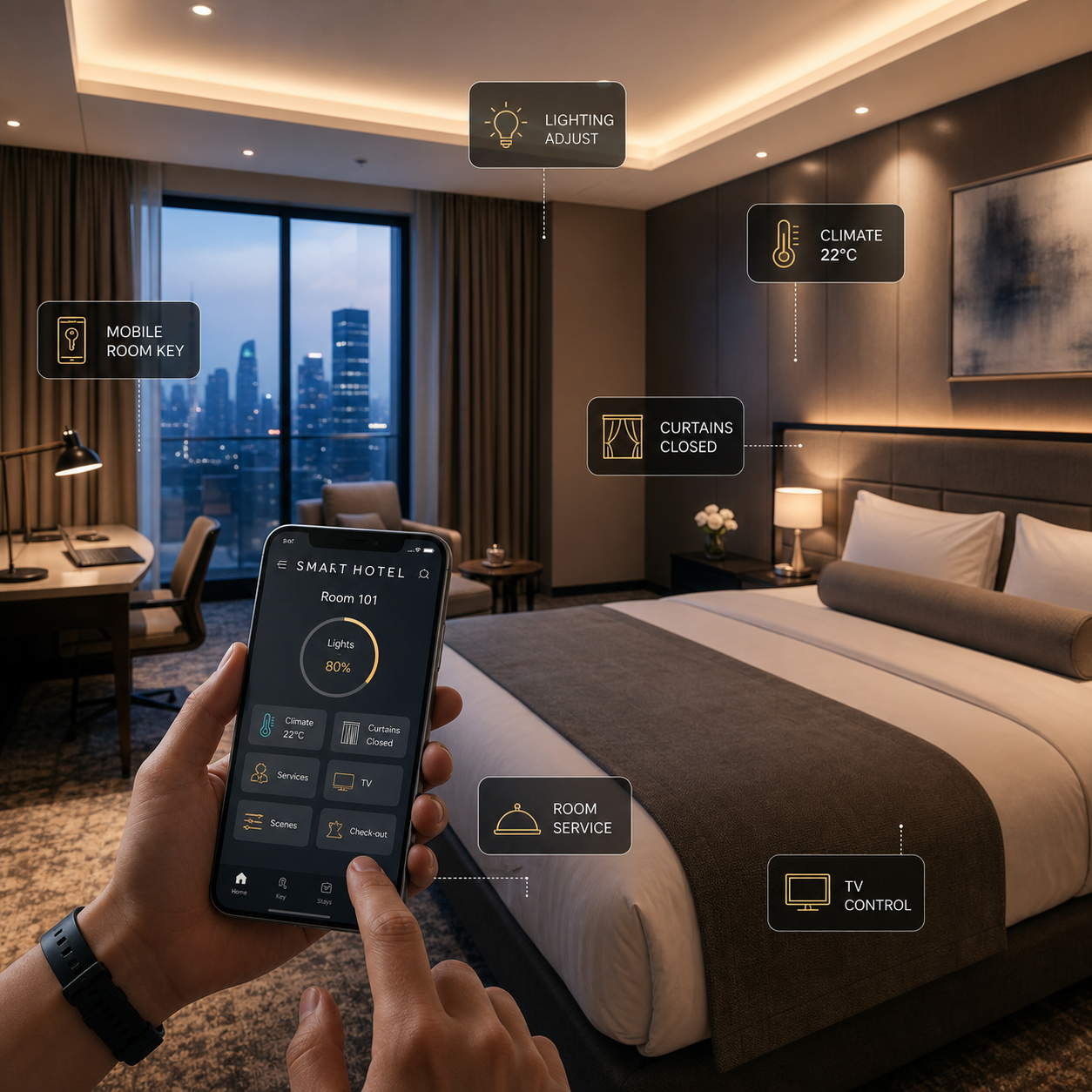
A connected room might include a smart thermostat, motorized curtains, occupancy sensors, connected lighting, a smart television, and a voice assistant. Each device can collect or receive information through a hotel network. A central platform may then share relevant events with the PMS, mobile application, housekeeping system, or building management system.
For example, when the PMS records a guest check-in, it could signal the room system to activate welcome lighting and set the climate to a comfortable temperature. When the guest checks out, the same system can switch the room to an energy-saving mode and notify housekeeping that the room is available for service.
The architecture usually includes four layers:
- Devices: locks, sensors, thermostats, meters, televisions, and equipment monitors.
- Connectivity: secure Wi-Fi, Bluetooth Low Energy, Zigbee, wired networks, or other communication methods.
- Software: IoT platforms, mobile apps, building systems, and the hotel property management system.
- People and processes: reception, housekeeping, engineering, security, and guests who act on the information.
This last layer matters most. A sensor that detects a leaking pipe has limited value if no workflow alerts engineering and tracks the repair.
Smart Room Applications That Improve Guest Comfort
Smart room applications improve comfort by giving guests simpler control over lighting, temperature, entertainment, and room access. They can also help hotels deliver consistent room standards while reducing manual intervention.
Connected lighting lets guests adjust brightness or select scenes such as reading, relaxing, or sleeping from a bedside panel or mobile app. Smart climate controls can respond to occupancy, time of day, and guest preferences. A room may lower heating or cooling when empty, then restore the selected setting before the guest returns.
Smart televisions can support streaming from a personal device, display hotel information, and provide checkout or service-request functions. Voice assistants may answer common questions, control room features, or connect guests with reception. Hotels should offer physical controls as well, since voice interfaces may be unsuitable for guests with hearing, speech, privacy, or accessibility needs.
Door and window sensors can support both comfort and safety. If a balcony door remains open while air conditioning runs, the system can alert the guest or pause cooling. Occupancy sensors can also trigger welcome lighting or help staff understand whether a room is vacant before entering.
Mobile room customization adds another layer. A guest might select a preferred temperature, lighting level, television language, or do-not-disturb setting before arrival. The convenience is real, but hotels should make manual adjustments easy and avoid forcing guests to download an app for basic room functions.
Frictionless Guest Journeys From Check-In to Check-Out
IoT makes the hotel journey more convenient by connecting mobile check-in, digital room keys, access systems, service requests, and checkout workflows. Guests can complete routine steps on their own while staff remain available for complex needs and personal assistance.
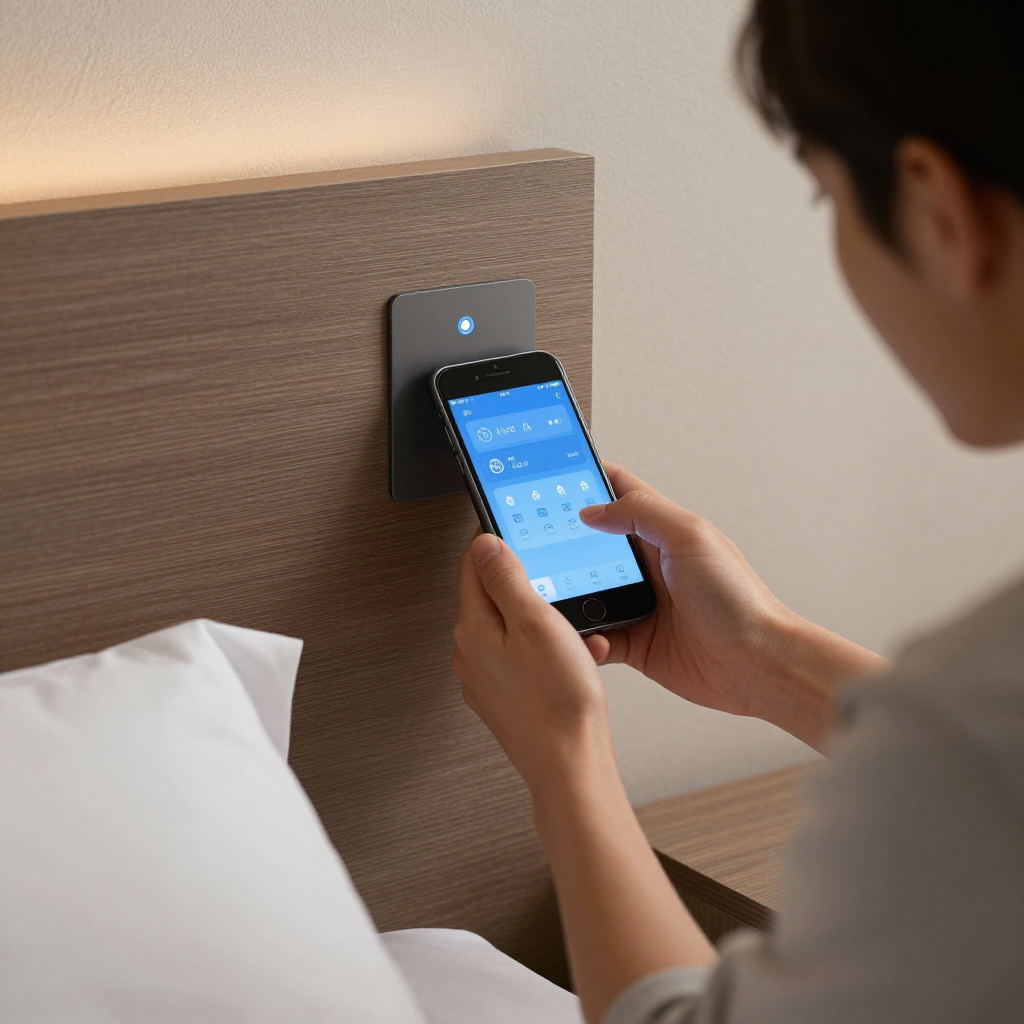
With mobile check-in, a guest can submit required details before reaching the property. Once the room is prepared and identity checks are complete, a digital room key can be issued through a hotel app or compatible mobile wallet. Bluetooth or near-field communication may then unlock the guestroom and selected hotel areas.
This process can reduce queueing at reception, especially during busy arrival periods. It also gives guests more control when they prefer limited interaction. However, digital access should have a practical fallback. A drained phone, incompatible device, weak network connection, or accessibility requirement should never leave a guest unable to enter the room.
Connected service systems can route requests directly to the correct team. A request for extra towels may go to housekeeping, while a faulty air conditioner creates an engineering ticket. The guest can receive status updates instead of calling repeatedly.
At checkout, the app may display the folio, collect feedback, and confirm departure. The PMS can then update room status, trigger energy-saving settings, and notify housekeeping. This is a smoother journey when the systems are synchronized; poorly integrated systems create duplicate records and frustrate both guests and employees.
Personalization Through Connected Guest Data
IoT supports guest personalization by using consented preferences to tailor room settings, communications, and services. The strongest programs use only data that improves the stay and explain clearly how that data is used.
A hotel may remember that a returning guest prefers a cooler room, a particular pillow type, or minimal housekeeping contact. When the reservation and PMS connect with the room platform, staff can prepare the room before arrival. The guest sees a thoughtful service rather than a collection of disconnected technologies.
Connected data can also support context-based offers. A guest who uses a fitness facility might receive relevant information about wellness services, while a family may see suitable dining or activity options. These recommendations should remain useful and restrained. Excessive notifications can make personalization feel like surveillance.
Hotels need a clear data governance model covering consent, retention, access, and deletion. Personal preferences should be separated from unnecessary tracking wherever possible. Voice assistants and in-room sensors require especially careful disclosure because guests may reasonably ask whether conversations, movement, or device activity are being recorded.
Good personalization follows a simple rule: collect the minimum information needed, use it for a stated purpose, protect it properly, and give guests meaningful control.
Operational IoT Applications Behind the Scenes
Back-of-house IoT applications improve hotel operations by showing staff what needs attention, where assets are located, and how spaces are being used. These systems can support faster service without removing the human judgment that hospitality requires.
Predictive maintenance uses sensors to monitor equipment such as chillers, pumps, elevators, laundry machines, and air-conditioning units. A change in vibration, temperature, or power consumption may indicate a developing fault. Engineering can investigate before a breakdown affects a guestroom or public area.
Housekeeping coordination is another practical use. Room sensors and PMS status data can show whether a room is vacant, occupied, inspected, or awaiting service. Staff can prioritize rooms needed for early arrivals and avoid entering rooms when guests are present.
Asset tracking can help locate rollaway beds, wheelchairs, maintenance tools, linens, and other shared equipment. Occupancy monitoring can reveal how meeting rooms, lounges, elevators, or fitness areas are used, supporting staffing and cleaning schedules.
The operational benefit depends on workflow design. An alert should identify the asset, describe the likely issue, assign responsibility, and record the outcome. Otherwise, staff receive a growing stream of notifications without a reliable way to prioritize them.
Energy Management and Sustainable Hotel Operations
IoT improves hotel energy management by linking occupancy sensors, smart thermostats, lighting controls, and energy meters to automated building decisions. Hotels can reduce unnecessary consumption while preserving the comfort guests expect.
Guestroom systems can detect vacancy and adjust heating, cooling, and lighting after a defined period. Common areas can dim lights when empty, while meters help managers compare energy use by floor, room type, or equipment group. Water sensors can identify unusual flows that may signal leaks.
Automation should account for real conditions. A room that is temporarily empty may still need climate control because a guest left luggage inside, and aggressive temperature changes can create discomfort or strain equipment. Hotels should set sensible thresholds, provide visible manual controls, and review exceptions rather than relying on a single rule for every room.
Energy savings vary by building design, climate, occupancy, equipment condition, and staff practice. Hotels should establish a baseline before installation and measure indicators such as kilowatt-hours per occupied room, peak demand, maintenance incidents, and guest comfort complaints. This turns sustainability claims into an operational measurement program.
Challenges and Best Practices for Implementing Hotel IoT
Successful hotel IoT implementation starts with a focused business objective, secure integration, reliable connectivity, and a phased rollout. Hotels should test a defined use case before expanding across every room or property.
Start with the outcome, not the device
Choose a measurable problem, such as reducing air-conditioning waste in vacant rooms, shortening maintenance response times, or improving mobile check-in. Map the current process, identify the systems involved, and define a baseline. A pilot of 20 to 50 rooms may reveal technical and service issues before a full deployment.
Integrate with the PMS and existing systems
The IoT platform should exchange accurate room, reservation, guest, and maintenance data with the PMS and related applications. Ask vendors about application programming interfaces, data ownership, upgrade procedures, and interoperability. A closed system may work initially but create expensive dependence later.
Build security and privacy into the design
Change default passwords, segment IoT devices from sensitive hotel systems, encrypt data in transit, apply updates, and monitor unusual network behavior. Limit employee access according to role and maintain an incident response plan. Privacy notices should explain sensors, voice features, personalization, retention, and guest choices in plain language. Guidance from the U.S. National Institute of Standards and Technology Cybersecurity Framework can help structure risk management.
Plan for reliability and human service
Hotels need network redundancy, battery procedures for digital keys, offline access options, and manual overrides for room controls. Train staff to resolve common failures and to serve guests who prefer traditional check-in or physical controls. Technology should remove friction, not make the hotel feel inaccessible.
Common implementation mistakes include installing devices without a process owner, collecting data without a retention policy, and measuring adoption instead of outcomes. A better scorecard combines guest feedback, task completion time, energy use, system uptime, privacy incidents, and maintenance costs. Expand only when the pilot improves the experience without creating unacceptable operational or security burdens.
Frequently Asked Questions About IoT in Smart Hotels
What are the most common IoT applications in smart hotels?
The most common applications include smart room controls, occupancy sensors, mobile check-in, digital room keys, connected televisions, predictive maintenance, asset tracking, energy management, and housekeeping coordination.
How does IoT improve the hotel guest experience?
IoT can reduce waiting, simplify room access, make temperature and lighting easier to control, speed up service requests, and support relevant personalization. Benefits depend on reliable systems and helpful staff support.
Are smart hotel rooms secure and private?
They can be, but security and privacy are design responsibilities rather than automatic benefits. Hotels should secure devices and networks, minimize data collection, explain monitoring clearly, and provide non-digital alternatives.
How can hotels start implementing IoT technology?
Hotels should define one operational or guest-experience goal, audit current systems, select compatible technology, run a limited pilot, train staff, and measure results before expanding.
What is the role of IoT in hotel energy management?
IoT connects sensors, meters, thermostats, and lighting systems so hotels can adjust energy use to occupancy and operating conditions. The property should track actual consumption and comfort outcomes to verify performance.