Virtual Reality Tours: The Future of Travel Planning
What Are Virtual Reality Tours in Travel?
Virtual reality tours are immersive, interactive previews of real-world destinations experienced through VR headsets or browser-based 360-degree video platforms. Unlike a photo gallery or a promotional video, a VR tour places you inside the destination — you can look around a hotel room, walk through a resort's grounds, or stand at the edge of a canyon before you've bought a single plane ticket.
The distinction from standard video matters. A conventional travel video is a directed experience — someone else decides what you see and when. A virtual reality tour gives the viewer spatial agency. You choose where to look. That shift from passive viewing to active exploration is what separates VR from every previous form of destination content.
Delivery formats range from fully rendered digital twin environments (three-dimensional recreations of real places, built from photogrammetry or lidar scans) to simpler 360-degree video content that works in a browser with no headset required. The latter has dramatically lowered the barrier to entry for both tourism operators and travelers.
How VR Is Changing the Way Travelers Research Destinations
VR is shifting destination research from static imagery and review-reading to experiential previewing — and that shift changes how travelers feel about a destination before they commit. Confidence levels, emotional connection, and even the specific questions travelers ask all change when they've already "been" somewhere virtually.
Traditional pre-trip research has a fundamental limitation: photos are curated, reviews are subjective, and neither gives a reliable sense of scale, atmosphere, or spatial layout. A traveler trying to decide between two beach resorts can read a hundred reviews and still not know whether the pool feels crowded or whether the walk to the beach is pleasant or punishing.
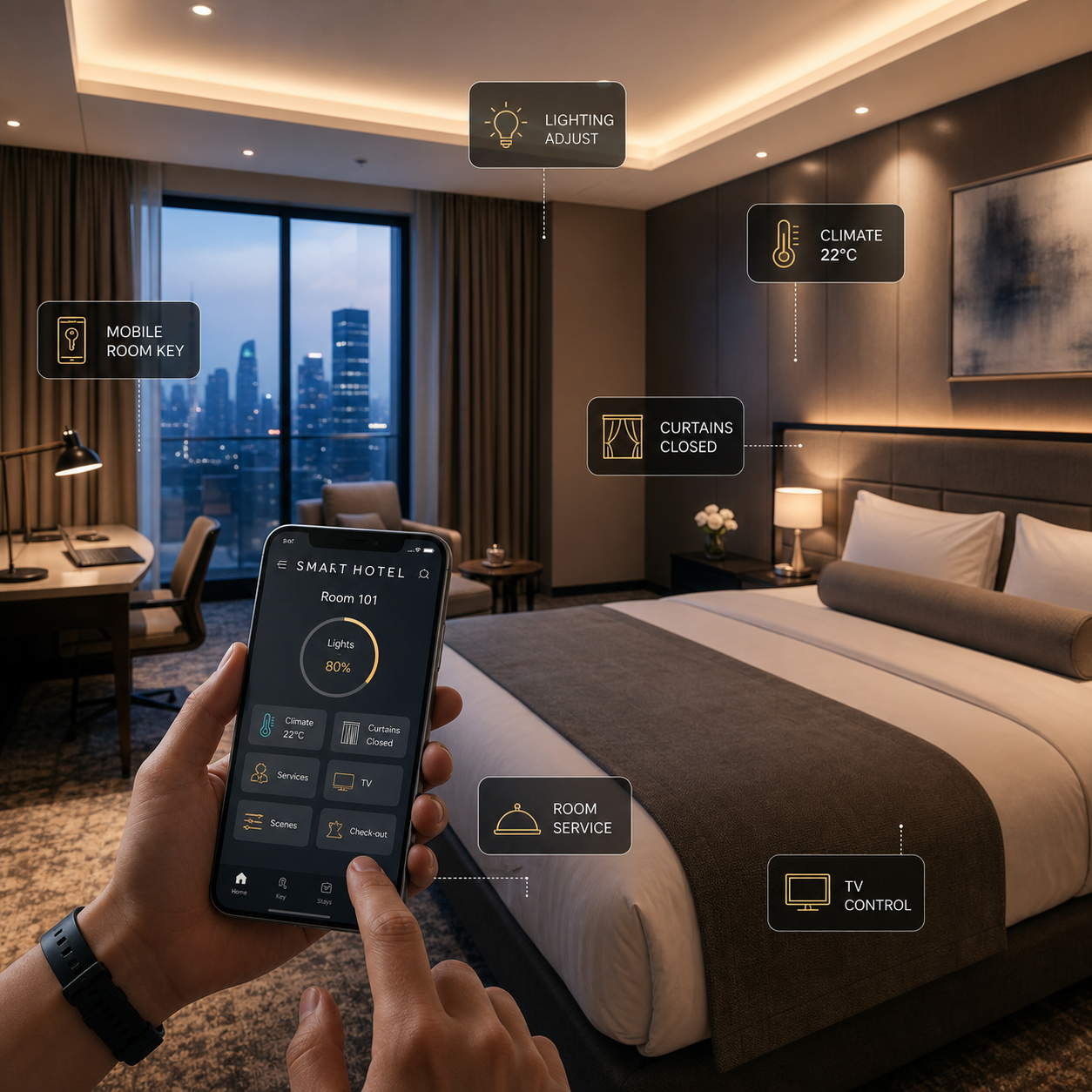
VR addresses this by letting travelers answer those questions themselves. The emotional response to an immersive preview — the moment someone "looks out" from a hotel balcony over a city skyline — creates a form of destination attachment that static content rarely achieves. That emotional engagement has measurable consequences for pre-trip decision-making: travelers who engage with VR previews tend to arrive with clearer expectations and higher satisfaction.
Tourism researchers have noted that immersive content also reduces the "imagination gap" — the anxiety that comes from not knowing what a place will actually feel like. Closing that gap earlier in the research process means travelers feel ready to book sooner.
Benefits for Travelers: Plan Smarter, Book with Confidence
For travelers, the core benefit of VR tours is reduced booking uncertainty. Seeing a destination in 360 degrees before committing money to flights and accommodation transforms travel planning from a leap of faith into an informed decision.
Practical advantages include:
- Destination comparison at scale — a traveler can "visit" three potential honeymoon locations in an afternoon, something physically impossible and financially prohibitive otherwise
- Accessibility previewing — travelers with mobility considerations can assess whether a destination's terrain, infrastructure, or facilities actually suit their needs before arriving
- Itinerary validation — confirming that a day trip or excursion is worth the time and cost before it's booked
- Family and group alignment — getting everyone in a household to agree on a destination is easier when everyone can experience it virtually first
There's also a quieter benefit: VR tours support more intentional trip planning. When travelers have genuinely previewed a destination, they make more specific choices about what they want to do there. That specificity tends to produce better trips — and fewer disappointed expectations.
Benefits for Tourism Businesses and Destinations
For hotels, tour operators, and Destination Management Organizations (DMOs), VR technology offers a direct path to higher travel booking conversion rates. Immersive content that showcases what's genuinely compelling about a destination — the texture of an experience, not just its description — reduces drop-off at key points in the booking funnel.
Consider what VR can do that a product page cannot. A boutique hotel with an extraordinary rooftop bar, a dive operator whose underwater environment is genuinely spectacular, a city whose historic quarter has an atmosphere that no photograph captures — these are properties and experiences where the gap between "described" and "experienced" is enormous. VR closes that gap at the marketing stage.
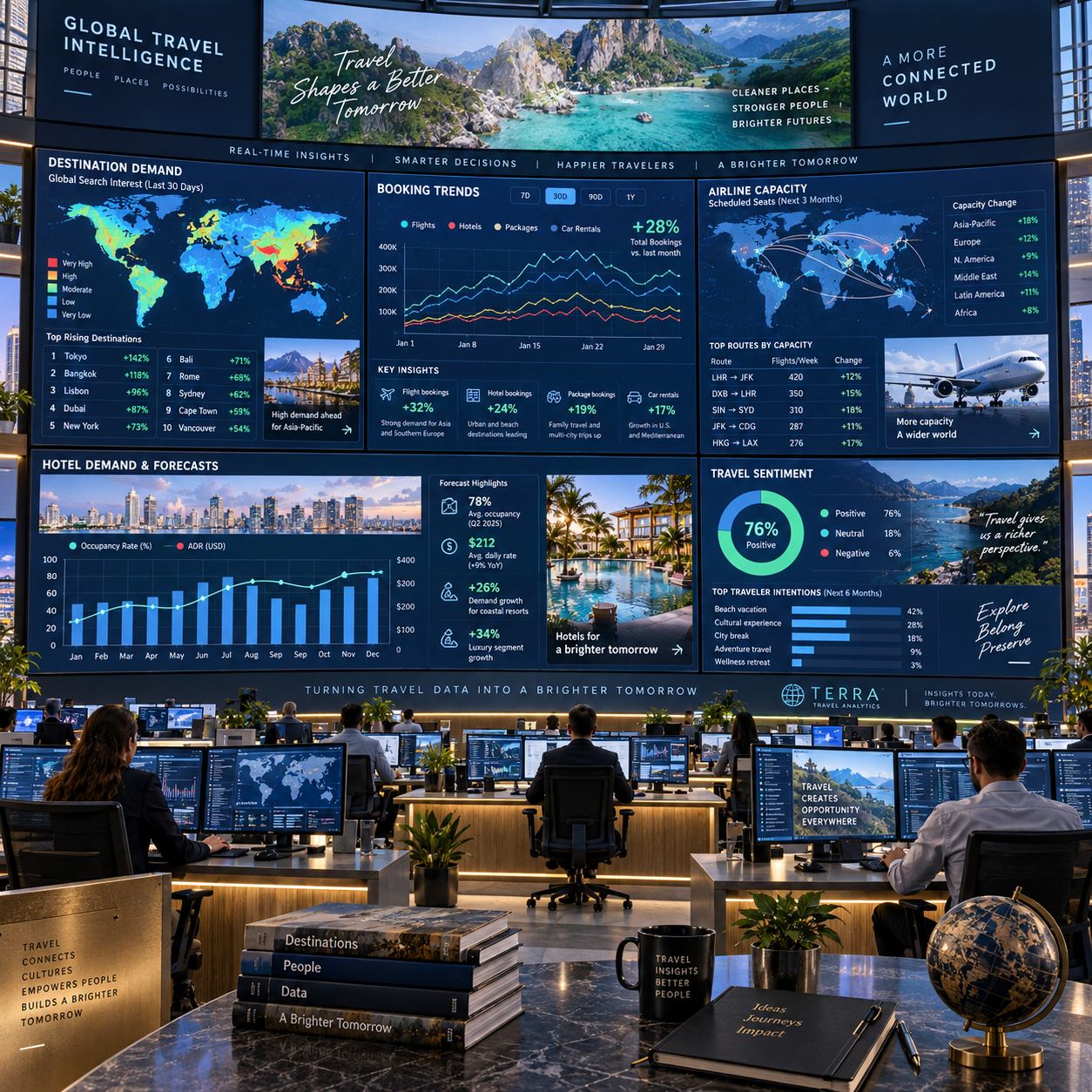
DMOs are increasingly deploying 360-degree video content and more sophisticated digital twin environments to compete for international visitors. A regional tourism board promoting a lesser-known destination faces an inherent disadvantage against established names — potential visitors simply have less mental imagery to draw on. Virtual reality tours can build that imagery artificially, giving an unfamiliar destination the same emotional accessibility as a well-known one.
The data on booking conversion is directionally consistent: immersive content tends to increase time-on-site, reduce bounce rates on accommodation pages, and lift conversion rates compared to standard photo-and-text listings. The exact figures vary by property type and audience, but the pattern holds across hospitality sectors.
Current Limitations and Honest Challenges
VR travel technology has real constraints, and overstating its maturity doesn't serve anyone. The most significant barriers are cost, access, and the unavoidable gap between a preview and the real thing.
Production cost remains a genuine obstacle for smaller operators. High-quality 360-degree video is achievable at relatively modest budgets, but fully rendered digital twin environments — the kind that offer true interactivity and spatial depth — require investment that many independent hotels, tour operators, and regional DMOs cannot easily justify without clear ROI evidence.
Access to VR headsets is improving but still uneven. Browser-based 360-degree experiences work on any smartphone, which dramatically expands reach. But the fully immersive experience that creates the strongest emotional response requires hardware that remains expensive and far from universal.
There's also a subtler problem: a VR preview can create expectations that the real destination doesn't always meet. If a hotel's virtual tour presents the property under ideal lighting with a curated soundtrack, and the guest arrives to find construction noise and a pool under renovation, the VR experience has actively damaged trust. The technology amplifies authenticity gaps — it doesn't hide them for long.
Finally, VR cannot replicate the sensory dimensions that matter most in travel: smell, temperature, the feeling of sand underfoot, the energy of a crowded market. It's a powerful planning tool, not a substitute for presence.
Emerging Trends: Where VR Travel Technology Is Heading
The most significant near-term developments are happening at the intersection of VR with AI personalization, haptic technology, and direct booking platform integration.
AI-personalized virtual tours are beginning to emerge — systems that adapt what a traveler sees based on their stated preferences, past booking history, or even real-time behavioral signals during the tour itself. Rather than a fixed 360-degree walkthrough, the experience becomes responsive: a family with young children gets guided toward the kids' pool and play areas; a solo traveler interested in food gets taken through the hotel restaurant and the nearby market street.
Haptic feedback peripherals are still early-stage for consumer travel applications, but the direction is clear. Adding tactile sensation to immersive travel experiences — the texture of a surface, the sensation of movement — would meaningfully close the gap between virtual preview and physical reality.
Digital twin destinations, built from precise geographic and architectural data, are moving from experimental projects to practical tools. Some cities and heritage sites are investing in digital twins not just for tourism marketing but for visitor management — allowing travelers to plan routes, understand crowd patterns, and make informed choices about timing before they arrive. This connects VR directly to sustainable tourism goals: better-distributed visitor flows reduce pressure on over-visited sites.
The integration of VR previews directly into booking platforms — so that a traveler can move from immersive preview to reservation in a single session — is the commercial development most likely to accelerate adoption in the next two to three years.
Should Travel Brands Invest in VR Now?
The honest answer is: it depends on your audience, your product, and your production capacity. VR investment makes clear sense for some tourism businesses right now; for others, the timing isn't right yet.
Invest now if your product has a strong visual and spatial story that standard content fails to convey. Luxury resorts, adventure operators, unique heritage sites, and destinations competing against more famous alternatives all have something to gain from immersive previewing. If the gap between "described" and "experienced" is wide, VR narrows it in your favor.
Be cautious if your operation is small, your booking volumes are modest, or your core audience skews toward demographics with lower VR device adoption. A well-executed 360-degree video — which requires far less investment than a full digital twin — may deliver most of the benefit at a fraction of the cost. Start there, measure the impact on engagement and conversion, and scale from that evidence base.
The ROI question is real and shouldn't be dismissed. VR content has a longer shelf life than most digital marketing assets, but it also becomes dated faster than text — a resort that renovates its lobby needs updated VR content, not just new photos. Build that maintenance cost into any investment decision.
What's clear is that the direction of travel is set. Immersive destination previewing is becoming an expected part of the research process for a growing segment of travelers. The question for tourism brands isn't whether to engage with VR technology, but when and at what depth.
Frequently Asked Questions
Can a virtual reality tour replace actually visiting a destination?
No — and that framing misses the point. VR tours are planning and decision-support tools, not substitutes for physical travel. They address the uncertainty that exists before a trip, not the experience of being there. The goal is a better-informed traveler arriving with accurate expectations, not a traveler who stays home.
What equipment do travelers need to experience VR travel tours?
Browser-based 360-degree tours require only a smartphone or desktop browser — no special hardware. For fully immersive experiences, a VR headset is needed. Consumer options range from standalone headsets to mobile-based viewers. Most tourism VR content is designed to work across both formats, prioritizing accessibility over maximum immersion.
Are VR tours only for luxury or high-budget travel brands?
No. While high-end properties were early adopters, 360-degree video production has become affordable enough for mid-market hotels, regional tour operators, and small DMOs. The technology tier matters less than the quality of execution and the relevance of the content to the traveler's decision.
How do VR tours affect travel booking rates?
Immersive content consistently shows positive effects on engagement metrics — longer session times, lower bounce rates, and improved conversion on accommodation pages. The effect is strongest when VR content is integrated into the booking journey rather than hosted separately as a standalone marketing asset.
What types of destinations or experiences benefit most from VR previews?
Destinations and experiences where the gap between description and reality is largest benefit most. This includes unique natural environments, heritage sites with complex spatial layouts, adventure experiences, and any property where atmosphere is a primary selling point. Destinations competing against more famous alternatives also gain disproportionately — VR can build the mental imagery that familiarity provides for well-known places.