


How Artificial Intelligence Is Revolutionizing Personalized Travel Recommendations
Travel planning used to mean flipping through guidebooks, calling a local travel agency, or scrolling through the same top-ten lists that everyone else was reading. That era is ending fast. Today, artificial intelligence is reshaping how travelers discover destinations, build itineraries, and experience the world — and the shift is happening quietly, embedded inside the apps and platforms millions of people already use every day.
From Generic Guides to Smart Suggestions: A Shift in Travel Discovery
Traditional travel recommendations were built for the average traveler — which, in practice, meant they served almost nobody particularly well. AI-driven personalization changes the equation by tailoring every suggestion to the individual making the search.
Think about the difference between a printed city guide and a platform that already knows you prefer boutique hotels, avoid tourist crowds, and always look for local food markets. The first gives you the same Eiffel Tower photo and the same three restaurant names it gives everyone else. The second surfaces a neighborhood you've never heard of, a market open only on Sundays, and a hotel with twelve rooms that happens to match your past booking patterns exactly.
This shift matters not just for convenience but for the quality of travel itself. When recommendations align with genuine preferences rather than mass appeal, travelers are more likely to book with confidence, enjoy their trips, and return to the platforms that got it right. That's the commercial logic driving every major Online Travel Agency (OTA) and tourism platform to invest heavily in AI personalization right now.
The Core AI Technologies Powering Personalized Travel
Three technologies do most of the heavy lifting behind personalized travel suggestions: machine learning algorithms, natural language processing, and recommendation engines. Understanding what each one actually does — in plain terms — helps explain why AI-driven travel feels so different from a basic keyword search.
Machine learning algorithms analyze patterns across enormous datasets. They identify correlations between traveler behavior and outcomes — which searches led to bookings, which itineraries got five-star reviews, which hotel categories drove repeat visits — and use those patterns to make increasingly accurate predictions for new users.
Natural language processing (NLP) allows platforms to understand what travelers mean, not just what they type. When someone searches "somewhere warm, not too touristy, good for solo hiking in October," NLP parses the intent behind those words and maps it to real destinations and experiences. It's what makes conversational search and chatbot interactions feel genuinely responsive rather than robotic.
Recommendation engines sit at the intersection of these two technologies. They combine collaborative filtering (what travelers similar to you have enjoyed) with content-based filtering (what matches your stated and inferred preferences) to generate ranked suggestions in real time. Platforms like Booking.com and Expedia have been refining these systems for years, and the gap between their outputs and a generic search result is now substantial.
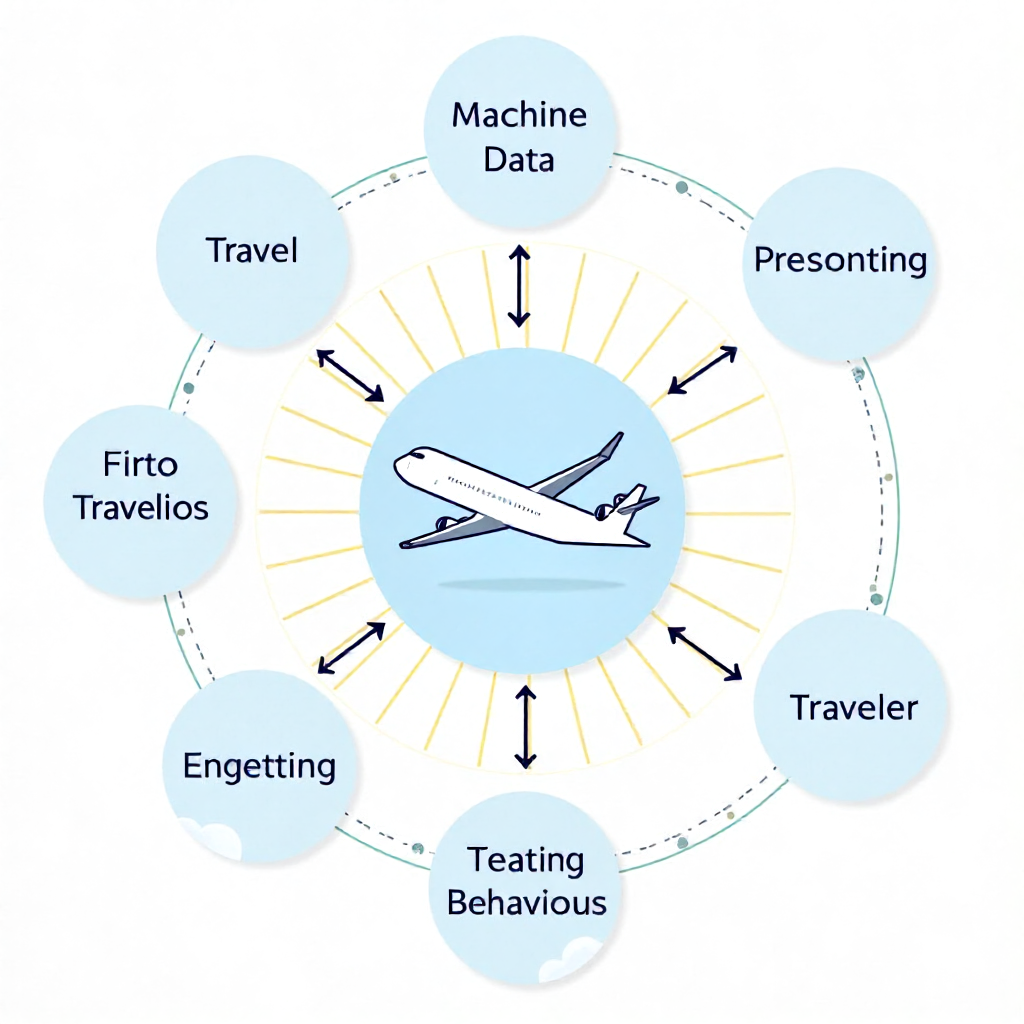
How AI Learns What Travelers Actually Want
AI personalization is only as good as the data it learns from. The inputs that feed user preference profiling are more varied — and more revealing — than most travelers realize.
At the most basic level, platforms track search history and past bookings. If you've consistently booked four-star city-center hotels on three-night trips, the system notes that. But modern recommendation engines go further. They analyze traveler behavior data at a granular level: which listings you clicked but didn't book, how long you spent reading a destination page, whether you filtered by "free cancellation" (a strong signal about risk tolerance), and even the time of day you typically browse.
Real-time signals add another layer. A traveler searching from a mobile device at 11pm on a Friday gets subtly different weighting than the same traveler searching from a desktop on a Tuesday morning. Context shapes intent, and AI systems are increasingly good at reading that context.
Over time, these inputs build a detailed preference profile — one that often captures preferences the traveler hasn't consciously articulated. That's both the power and the slight unease of the technology. The system may know you prefer quieter neighborhoods before you've thought to say so.
Real-World Applications: Where Personalization Meets the Travel Journey
AI personalization touches almost every stage of the modern travel journey, from initial inspiration through to in-destination guidance.
Destination and Experience Discovery
Platforms now surface destination suggestions based on inferred mood, travel style, and seasonal patterns rather than just popularity. A traveler who consistently books cultural experiences and avoids beach resorts will see a very different homepage than someone who books all-inclusive packages every February.
Dynamic Itinerary Generation
Dynamic itinerary generation is one of the most visible applications. Tools like Google Travel and several AI-native startups can now produce day-by-day trip plans that account for travel time, opening hours, weather forecasts, and personal preferences — adjusting automatically when conditions change. A flight delay, for instance, can trigger an automatic itinerary reshuffle rather than leaving the traveler to figure it out manually.
Chatbots and Virtual Travel Assistants
Chatbots and virtual travel assistants powered by NLP handle everything from booking modifications to real-time local recommendations. The best of them now maintain conversational context across a session, so a traveler can say "actually, make it two nights instead of three" and the assistant understands what "it" refers to without starting over.
Personalized Pricing and Offers
Predictive analytics also drive personalized pricing — not necessarily charging different people different prices for the same room, but timing offers and promotions based on individual booking behavior. A traveler who typically books six weeks out might receive a reminder at exactly that window. Someone who tends to book last-minute gets different messaging entirely.
Benefits for Travelers and Tourism Businesses Alike
The value of AI personalization flows in both directions. For travelers, the most immediate benefit is time. Finding the right accommodation, activities, and restaurants for a specific trip used to require hours of research across multiple tabs. A well-tuned recommendation engine compresses that process significantly — not by limiting options, but by surfacing the right ones faster.
There's also a quality dimension. When hyper-personalization works well, travelers discover experiences they genuinely love rather than defaulting to whatever has the most reviews. That's a meaningful improvement in the actual travel experience, not just the planning process.
For tourism businesses and OTAs, the commercial case is equally clear. Higher relevance means higher conversion rates. Personalized post-trip recommendations drive repeat bookings. And AI-powered customer service tools reduce the cost of handling routine inquiries, freeing human agents for complex cases that actually require judgment.
Small tourism operators benefit too, though less directly. When recommendation engines move beyond pure popularity rankings, niche accommodations and local experiences gain visibility they couldn't achieve through marketing spend alone.
Challenges and Considerations: Data Privacy, Bias, and Over-Reliance
AI-driven travel personalization comes with real limitations, and glossing over them would give an incomplete picture.
Data privacy is the most immediate concern for most travelers. The same behavioral data that makes recommendations accurate also represents a detailed record of movement patterns, spending habits, and lifestyle preferences. Regulations like GDPR in Europe set minimum standards for how platforms must handle this data, but enforcement is uneven and the commercial incentives to collect more data are strong. Travelers using AI-powered platforms are, in effect, trading personal data for convenience — a trade-off worth understanding consciously rather than accepting by default.
Algorithmic bias is a subtler problem. If the training data that shapes a recommendation engine reflects historical booking patterns — which destinations got promoted, which properties appeared first in search results — then the AI may perpetuate those same biases rather than correcting them. Less-visited destinations, smaller operators, and experiences that appeal to underrepresented traveler demographics can end up systematically underweighted.
There's also the question of serendipity. Part of what makes travel meaningful is the unexpected — the restaurant you found by wandering, the town you stopped in because the train was delayed. An AI optimized for preference-matching might quietly filter out exactly those experiences, delivering a trip that's perfectly calibrated but somehow predictable. The best platforms are starting to address this deliberately, building in "discovery mode" features that intentionally surface the unexpected.
What's Next: The Future of AI-Driven Travel Personalization
The next wave of AI in travel is already visible in early-stage products and platform experiments. Generative AI is the most significant development — tools that don't just rank existing options but synthesize entirely new trip concepts in response to natural language prompts. Ask a generative AI travel assistant for "a ten-day trip combining slow food, Roman history, and coastal hiking, avoiding peak tourist months," and it can now produce a coherent, bookable itinerary rather than a list of links.
Multimodal data integration is coming next. Future systems will combine text preferences with image inputs (show me places that look like this photo), voice interactions, and even biometric signals from wearables to build richer, more dynamic traveler profiles. The boundary between planning a trip and experiencing one is starting to blur.
Longer term, increasingly autonomous travel assistants may handle the entire booking process — monitoring prices, flagging optimal booking windows, managing changes — with minimal human input. Whether that level of automation feels liberating or uncomfortable will probably depend on the individual traveler. But the direction of travel, so to speak, is clear.
Frequently Asked Questions
How does AI personalize travel recommendations differently from traditional search filters?
Traditional filters are static — you set them manually and get results that match. AI personalization is dynamic and inferential. It learns from your behavior over time, weights signals you haven't explicitly set, and adjusts recommendations in real time based on context. The result is suggestions that often feel more accurate than what you'd configure yourself.
Is my personal data safe when AI platforms use it for travel suggestions?
Safety depends on the platform and jurisdiction. Reputable OTAs operating in regulated markets must comply with data protection laws like GDPR, which give users rights over their data. Reading privacy settings and opting out of non-essential data collection where possible is the practical first step for privacy-conscious travelers.
Can AI recommendations replace a human travel agent?
For straightforward trips to well-documented destinations, AI tools are already competitive with — and often faster than — a human agent. For complex multi-leg itineraries, niche destinations, or travelers with very specific accessibility or medical needs, experienced human agents still add value that AI hasn't fully replicated. The two are more complementary than competitive at this point.
Do AI travel tools work well for niche or off-the-beaten-path destinations?
This is where AI currently struggles most. Recommendation engines perform best when trained on rich datasets, and obscure destinations generate less data. Travelers planning trips to genuinely remote or niche locations will likely find AI suggestions thin and should supplement them with specialist sources, travel forums, and local expertise.
How accurate are AI-generated itineraries for first-time travelers?
Accuracy varies by destination and platform maturity. For major destinations, AI itineraries are generally reliable for logistics and timing. They're less reliable for capturing local nuance — the neighborhood that's technically close but feels wrong, or the attraction that's technically open but not worth visiting on a weekday. First-time travelers should treat AI itineraries as a strong starting framework, not a finished plan.